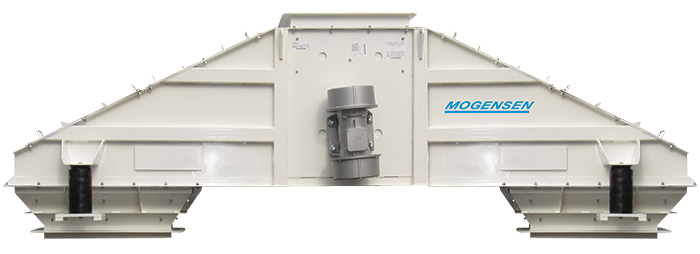
The Mogensen range of Vibrating Feeders has been developed over the past 40 years, driven by electric, hydraulic or pneumatic powered vibrator motors to produce either a linear or rotary action depending on the application needs.


Can’t find what you’re looking for? Maybe these FAQs could help.
An ATEX certified vibrating machine is built to operate safely in potentially explosive atmospheres, in line with ATEX regulations. This is relevant for some mining, chemical, food and pharmaceutical processes where dust or gas hazards may be present.
Heated or cooled trough jackets can be fitted to vibrating equipment to manage material temperature as it passes through. Air heated jackets help prevent damp or sticky material clinging to the trough, while cooled jackets suit hot or temperature-sensitive products.
Vibrating equipment is driven by out-of-balance vibrator motors, powered by electric, pneumatic or hydraulic drives depending on the application. Invicta Vibrators, recognised as an industry standard, are used as the vibrator motor across this equipment range.
Vibratory processing equipment can offer low maintenance and energy consumption, high operational safety, easy cleaning with reduced contamination risk, reduced dust emissions, and strong wear and impact resistance, while remaining cost effective at high throughput.
Yes. Vibrating equipment can be designed to handle dry, damp or wet materials, with features such as specialist linings, enclosed housings and auto mesh cleaning or deck heating helping to maintain performance on more difficult, moisture-affected products.
Bespoke vibratory equipment is machinery designed around a specific process or material rather than adapted from a standard model. Design choices can include mild or stainless steel construction, open or fully enclosed housings, and base-mounted or suspended layouts, so the machine suits the exact application.
Yes. Vibrating equipment can be custom built with options such as specialist wear linings, bespoke control systems, and screen decks, flow control gates or multiple outlets, allowing the machine to be matched closely to the material, process and throughput involved.